
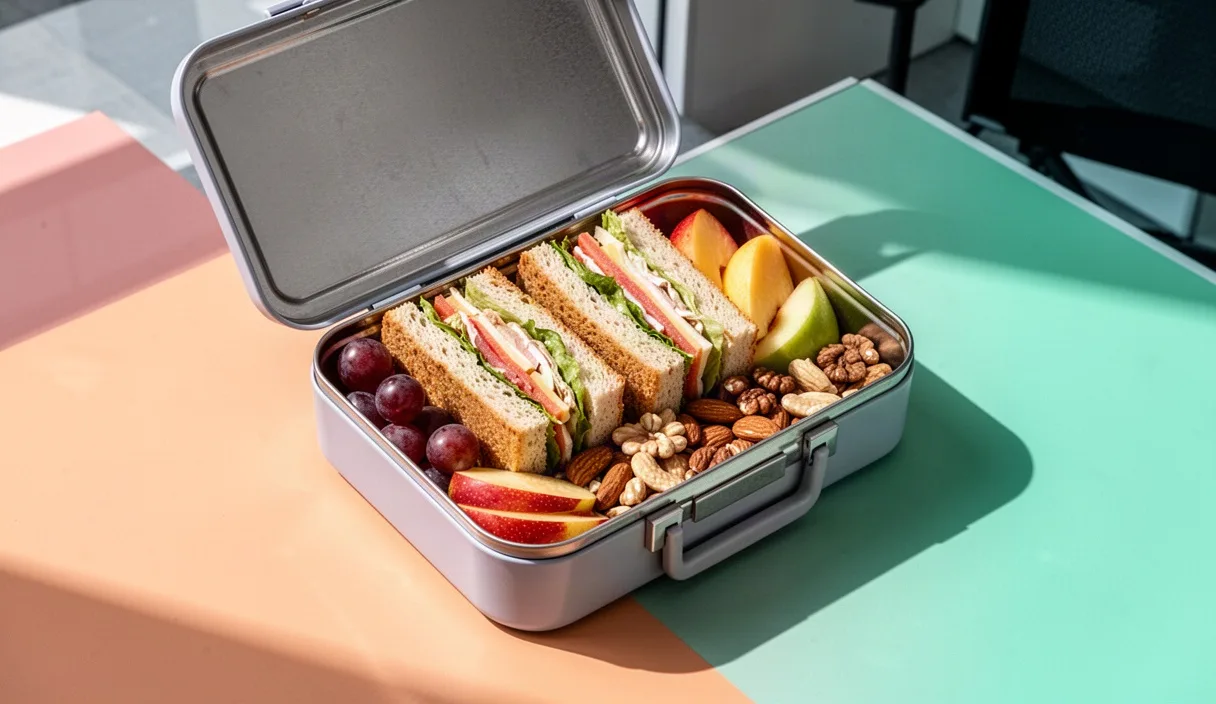

There's a particular kind of surrender that happens around 12:40pm on a Tuesday. You've meant to sort lunch since Sunday, the fridge has a wilting bag of spinach and half a lemon in it, and the vending machine down the corridor is glowing like it knows something you don't. It takes your coins, gives you a packet of crisps and a chocolate bar, and you're back at your desk twelve minutes later feeling vaguely cheated. This happens to most of us, not because we're bad at planning, but because the vending machine is designed to be easier than any alternative in that exact moment.
Beating it isn't about willpower or some elaborate meal-prep Instagram routine. It's about building a handful of lunches that are faster than the walk to the machine, cheaper than the £1.20 you'll spend three times a week without noticing, and varied enough that you don't get bored by Thursday. This piece is about the mechanics of that, not the virtue of it.
Why the vending machine wins by default, and how to change that
The vending machine wins on friction, not on taste. It's closer than the kitchen at home was this morning, it doesn't require a decision beyond which slot to press, and it never runs out of the thing you actually want the way the office fridge does when someone's nicked your yoghurt. Any packed lunch that's going to compete has to match that convenience, at least most days.
The fix isn't one perfect lunch, it's a short rotation, maybe five or six options, that live in your head the way "chicken and chips from the place on the corner" already does. If you have to think from scratch every evening, you'll lose to the machine roughly three days out of five. If you've got a mental list, you're choosing between options rather than deciding whether to bother at all.
Start small. Pick two lunches you already like making and can do without a recipe, and commit to having the ingredients in the house for both, every week, for a month. That's the whole strategy at the start. Everything else in this article builds on that base.
Five lunches that take under ten minutes to build
None of these need the oven, and none need more than one pan if any pan at all. The times below include getting the box, filling it, and putting the lid on.
- Tinned mackerel with new potatoes and a lemon wedge - boil the potatoes the night before, keep them in the fridge, tin and lemon go straight in. Four minutes.
- Leftover roast chicken, couscous, roasted veg from Sunday - couscous only needs boiling water and five minutes standing, so make it while you're getting dressed. Eight minutes.
- Houmous, falafel, pitta and a handful of cherry tomatoes - all shop-bought, all kept in the fridge for up to four days. Three minutes.
- Soup from a carton, decanted into a flask, with a bread roll - genuinely thirty seconds if the flask is clean already. Good for the colder months when you want something hot at your desk rather than something you have to reheat in a shared microwave.
- Egg fried rice made from Sunday's leftover rice, frozen peas and one egg - fry for three minutes, cool for two, box it up. Seven minutes including the cooling.
The common thread is that each one leans on something already done, last night's roast, a batch of boiled potatoes, rice from the takeaway you didn't finish. None of these are recipes so much as arrangements.
What travels well in a bag without going soggy
Sogginess ruins more packed lunches than bad flavour ever does. The culprits are usually the same three things: dressing added too early, bread touching anything wet, and hot food sealed while it's still steaming.
A few rules that hold up across most lunches. Dress salads at the desk, not at home, by carrying dressing in a small separate pot or an old jam jar. Keep bread, crackers or crisps in a side compartment or a separate bag rather than in the same box as anything with sauce. And if you've made something hot, leave the lid slightly ajar for five minutes before sealing it fully, otherwise the condensation drips straight back onto your rice or pasta and turns it gluey by lunchtime.
Some foods are naturally forgiving and worth building lunches around if you're prone to forgetting the rules above:
| Travels well | Travels badly |
|---|---|
| Cold pasta with oil-based dressing | Anything with mayonnaise left unrefrigerated past 11am |
| Rice-based salads | Green leaf salads dressed more than an hour ahead |
| Wraps rolled tightly in foil | Open sandwiches or anything on soft white bread with wet fillings |
| Roasted vegetables, room temperature | Anything fried, which turns soft and greasy within two hours |
If your office doesn't have a fridge, which is more common than you'd think outside of the bigger city offices, a cheap insulated bag with one ice pack will keep food at a safe-ish temperature for around four hours. Beyond that, you're taking a chance with anything containing egg, chicken or dairy, and it's worth being cautious rather than finding out the hard way.
A backup option for the desk drawer
Every rotation needs a fallback for the day you genuinely forgot, overslept, or the fridge was empty because it was bin day and you hadn't shopped. This is where the vending machine usually claims its victory, so the backup has to live at work, not at home.
Keep two or three of these in your desk drawer at all times: a tin of soup with a pull-tab lid, a packet of instant oats, a tin of beans, a couple of oatcakes and a jar of peanut butter, or a pack of microwave rice and a tin of curry sauce. None of these are exciting, but all of them beat crisps and a chocolate bar for around the same three or four pounds, and they last for weeks without attention.
The trick is topping the drawer up on payday rather than waiting until it's empty. Set a reminder on your phone for the first Friday of the month, buy three tins, done. It takes less time than the walk to the vending machine and back.
Budgeting for lunches without overspending
A meal deal at most supermarkets sits somewhere between £3.50 and £4.50 depending on where you are and what's in it. Do that five days a week and you're at roughly £20, sometimes closer to £22, every week, which adds up to nearly £90 a month on lunch alone. A packed lunch built from batch-cooked basics, rice, tinned fish, root vegetables, frozen peas, tends to cost somewhere between £1.50 and £2.50 per portion, so the same five days lands closer to £10, sometimes less if you're using up leftovers that would otherwise go in the bin.
The saving isn't dramatic on any single day, which is exactly why it's easy to ignore. But over a month it's the difference between roughly £90 and £45, and over a year that's a genuine chunk of money, potentially enough to cover a couple of months of the gas bill in winter.
A rough weekly shop for five packed lunches, based on prices at most large supermarkets rather than the corner shop, looks something like this: a bag of rice or pasta (£1), a dozen eggs (£2), a tin of tuna or mackerel three or four times over (£4), a bag of frozen vegetables (£1.20), some bread or wraps (£1.50), and whatever fruit is in season and therefore cheap that week (£2). That's around £12 for the raw materials of a working week's lunches, before you even count the leftovers you're reusing from dinner.
Batch prepping without a full Sunday session
Not everyone has three free hours on a Sunday, and the idea that you must in order to eat well during the week puts a lot of people off before they've started. Batch prepping can happen in fifteen-minute pockets instead.
Boil a big pot of rice or potatoes while you're cooking dinner on any night, not just Sunday, since it takes no extra attention and costs nothing beyond the gas or electric you're already using. Roast a tray of vegetables alongside whatever's already in the oven, tossing in extra carrots or peppers costs you nothing but oven space. Hard-boil four eggs while the kettle's on for your morning tea, they'll keep in their shells in the fridge for up to a week.
None of this needs a dedicated session. It needs the habit of doubling up whatever you're already cooking on two or three nights a week, so that by Thursday you've got a small stockpile of components rather than a fridge of nothing.
Swapping ideas with colleagues to avoid the same three lunches on repeat
Most offices have at least one person who brings something that makes everyone else's lunch look grey by comparison. Ask them what it is. This sounds obvious, but most people eat next to colleagues for years without ever swapping a single idea, and end up stuck on the same three lunches out of habit rather than lack of options.
A loose weekly swap works well without needing a rota or a shared spreadsheet nobody updates. Some offices run a five-minute Friday chat where everyone says what they're bringing next week, which does two things at once: it gives you fresh ideas, and it means you've already decided your Monday lunch before the weekend starts, which removes the Sunday-night dithering that often ends in a vending machine Monday anyway.
Common mistakes
Buying ingredients for an ambitious lunch you'll only make once, then letting the rest rot in the fridge, is the single most common way people give up on packed lunches within a fortnight. Stick to ingredients that reappear across two or three of your regular meals.
Packing food you don't actually want to eat at 1pm just because it's "healthy" is another. If you dread opening the box, you'll cave and buy something else anyway, wasting both the food and the money.
Forgetting the fork, the spoon, or a way to reheat food is a small thing that derails an entire lunch. Keep a spare set of cutlery in your desk drawer alongside the backup tins.
Next steps
Pick two of the five quick lunches above and buy the ingredients for both this week, nothing more. Stock the desk drawer with two backup options before payday runs out. Next Sunday, or whichever night you're cooking dinner anyway, double one component, rice, potatoes or roasted vegetables, and use the extra for Monday and Tuesday's lunch. That's the whole system, built in under an hour of extra effort across a full week, and it's already more than enough to make the vending machine's job a lot harder.