
Ask anyone past their thirtieth birthday why they wake at 4am for no reason, and you'll get the same rueful laugh. Something shifts, quietly, somewhere around that decade mark, and sleep that used to feel like a solid eight-hour block starts to feel more like a patchwork blanket with gaps in it. It's not your imagination, and it's not just stress or a bad mattress, though both can make it worse.
The good news, and it is genuinely good news, is that lighter sleep after 30 is largely explained by well-documented changes in sleep architecture, not by some vague decline. Once you understand what's actually happening under the duvet, most of the fixes are boring, practical and don't involve buying anything. This piece walks through the biology, the everyday habits that make it worse, and a two-week routine worth actually testing on a Tuesday rather than waiting for the "right" moment.
What actually changes in sleep architecture after 30
Sleep isn't one continuous state. It cycles through stages roughly every 90 minutes: light sleep, deep slow-wave sleep, and REM sleep, where most dreaming happens. In your twenties, a bigger share of the night is spent in deep, slow-wave sleep, the stage that's hardest to wake someone from and does most of the physical repair work. From the early thirties onward, the proportion of deep sleep starts to shrink, gradually, by roughly two per cent per decade according to sleep lab studies using overnight EEG recordings.
At the same time, the number of brief awakenings, arousals lasting a few seconds and rarely remembered, increases. You're not sleeping less in total, necessarily, but more of the night sits in lighter stages where a delivery van outside or a partner turning over is enough to nudge you toward waking. This is why someone in their thirties might report "sleeping fine" but still wake up less refreshed than they did a decade earlier.
There's also a circadian shift worth knowing about: the body's internal clock tends to advance slightly with age, meaning many people naturally start feeling sleepy earlier and waking earlier too. This isn't decline so much as recalibration. Fighting it with late nights and lie-ins on alternating days tends to create more fragmentation, not less.
None of this means deep, restorative sleep is unreachable after 30. It means the margin for error, on caffeine timing, room temperature, screen habits, gets narrower. What used to be forgivable at 24 now shows up the next morning.
Common culprits: caffeine, alcohol, screens
Caffeine has a half-life of roughly five to six hours in an average adult, which means a 3pm flat white still has a meaningful dose circulating at 9pm. In your twenties, deeper sleep architecture could sometimes absorb that disruption without much fallout. With less deep sleep in reserve, the same afternoon coffee is more likely to show up as a 2am wake-up that takes forty minutes to shake off.
Alcohol is the trickier one because it feels like it helps. A glass of wine with dinner does bring on sleep faster, but as it metabolises overnight it fragments the second half of the night, suppressing REM sleep and causing the lighter, choppier waking that many people associate with a "light sleeper" personality rather than what it usually is: a chemical rebound effect. Two glasses roughly three hours before bed is a reasonable cut-off to trial, rather than none at all forever, since abrupt total abstinence isn't realistic for most households.
Screens are less about "blue light" mythology and more about content and posture. Scrolling in bed, propped against pillows, keeps the brain in an alert, decision-making mode right when it should be winding towards drowsiness. The light itself matters less than the fact that most phone use before bed involves checking something, work email, news, a group chat, that produces a small adrenaline spike.
- Caffeine cut-off: aim for no coffee, tea or cola after roughly 2pm if bedtime is 11pm.
- Alcohol timing: finish the last drink at least three hours before lights out.
- Screens: move the last scroll to the sofa, not the bed, and stop 30 to 45 minutes before sleep.
Why a fixed wake time helps more than an early bedtime
The instinct when sleep feels bad is to go to bed earlier. It rarely works, because lying awake for an extra 40 minutes trying to force sleep just teaches the brain to associate the bed with frustration. A more reliable lever is fixing the wake time, seven days a week, including weekends, within about a 30-minute window.
Waking at the same time anchors the circadian rhythm, which in turn regulates when the body naturally starts producing melatonin the evening before. Sleep researchers sometimes describe this as "sleep pressure building on schedule": if you're up at 6:45am every day, by 10:30pm the body has accumulated enough pressure to fall asleep without much negotiation. Shift that wake time around, sleeping until 9am on Saturday and Sunday, and Monday night's sleep pressure arrives late, pushing bedtime later and starting the week's fragmentation cycle again.
This matters more after 30 precisely because the margin is thinner. A twenty-two-year-old can often absorb two chaotic weekend nights and reset by Wednesday. A thirty-eight-year-old is more likely to spend the whole week catching up, then repeat the pattern the following weekend, which produces the sensation of permanently light, unsatisfying sleep even though total hours look fine on paper.
A fixed wake time doesn't require a strict bedtime enforced by willpower. It works the other way round: pick a wake time you can hold every day for two weeks, and let bedtime settle wherever the accumulated tiredness puts it.
Bedroom conditions that make a measurable difference
Temperature is the single most measurable lever in most bedrooms. Core body temperature needs to drop by roughly one degree Celsius to initiate deep sleep, and a room that's too warm actively works against that. A range of 16 to 19 degrees Celsius is what most sleep clinics recommend for adults, which in many older homes with poor insulation means cracking a window even in cooler months rather than relying on a radiator running all night.
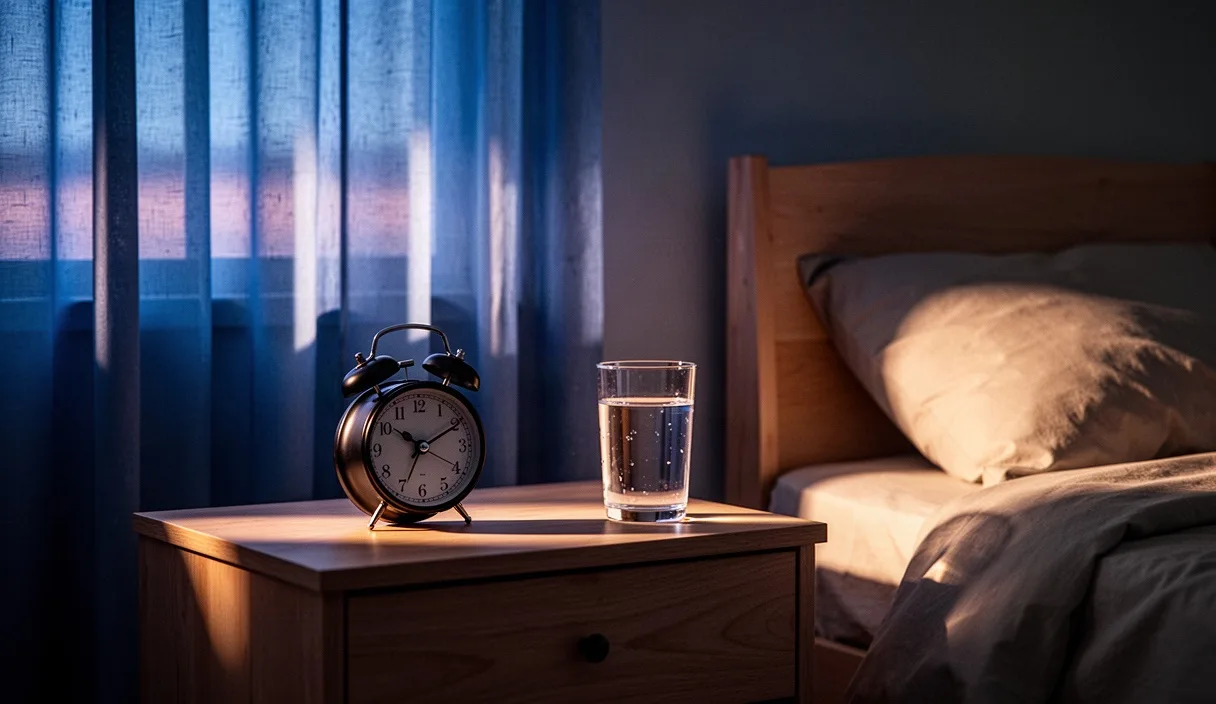
Light matters almost as much, particularly for the lighter sleep stages that dominate after 30. Streetlight leaking through thin curtains, or a standby light on a television, is enough to interrupt the shallow stages that used to tolerate more disturbance. Blackout curtains or a simple eye mask are cheap, unglamorous fixes with a decent evidence base behind them.
Noise is the third variable, and it's the one people tend to accept as unchangeable, city traffic, a partner's snoring, a boiler that clicks. A constant low-level sound, like a fan or white noise, can mask sudden variable noises that are more likely to trigger the brief arousals covered earlier. It's not about silence, it's about consistency.
| Bedroom factor | Target range | Cheap fix |
|---|---|---|
| Temperature | 16 to 19°C | Window cracked open, lighter duvet |
| Light | Near total darkness | Blackout curtain, eye mask |
| Noise | Consistent, not silent | Fan or white noise machine |
When light snoring becomes worth mentioning to a GP
Occasional snoring after a heavy meal or a late glass of wine is common and rarely worth worrying about. It becomes worth raising with a GP when it's regular, loud enough to be heard through a closed door, or accompanied by gasping, choking sounds, or pauses in breathing that a partner notices. These can be signs of obstructive sleep apnoea, which becomes more common with age and with weight gain around the neck and throat, and which fragments sleep far more severely than any of the habits discussed above.
Daytime clues matter too: falling asleep unintentionally during the day, waking with a dry mouth or headache most mornings, or needing an alarm to wake even after what should be a full night's sleep. None of these confirm sleep apnoea on their own, but together they're a reasonable prompt to ask a GP about a referral for a sleep study, which is usually done at home now with a small monitoring device rather than an overnight hospital stay.
This isn't something to self-diagnose from a symptom checklist online. A GP can rule out simpler explanations first, nasal congestion, thyroid issues, certain medications, before considering a referral, and that ordering matters.
A two-week routine to test
Rather than changing everything at once, which makes it impossible to know what actually helped, a two-week trial with one new variable each few days tends to produce clearer results.
- Days 1 to 3: Fix the wake time within a 30-minute window, every day including weekends. Change nothing else yet.
- Days 4 to 7: Add the caffeine cut-off at 2pm and move the last screen session to the sofa, finishing 30 minutes before bed.
- Days 8 to 10: Adjust bedroom temperature to the 16 to 19 degree range and address the biggest light leak in the room.
- Days 11 to 14: Trial the alcohol cut-off, last drink at least three hours before lights out, and note how the second half of the night feels compared with days 4 to 7.
Keep it low-effort. The point isn't perfection, it's noticing which single change moved the needle, since that's the one worth keeping permanently rather than the whole bundle.
Common mistakes
Going to bed earlier without fixing the wake time first, which usually just adds lying-awake time rather than sleep. Treating weekend lie-ins as harmless recovery, when they're often what resets the fragmentation cycle each week. Cutting caffeine entirely for a few days then reintroducing it at the old dose and time, which muddies any read on what actually helped. And assuming every restless night after 30 needs a medical explanation, when often it's the ordinary, well-documented shift in sleep architecture that this article opened with.
What to do next
Start with the wake time, since it's free, requires no equipment and tends to produce the clearest signal within a week. Layer in the caffeine and screen changes next, then the room temperature and light fixes, since those are one-off adjustments rather than daily discipline. Keep the alcohol change for last, when there's already a baseline to compare it against.
If, after a genuine two-week trial, sleep still feels shallow, unrefreshing or interrupted by breathing changes a partner has noticed, that's the point to book a GP appointment rather than trying a third supplement or a fourth app. Lighter sleep after 30 is normal and manageable for most people with the changes above; persistent, severe fragmentation with daytime sleepiness is a different, medical question, and it deserves a proper answer rather than another sleep tracker.